An ongoing project by Blanca Martinez de Rituerto and Joe Sparrow.

Follow us on our offical Facebook page!

Buy Our Books!
Showing posts with label type: magical beast. Show all posts

Monday, 25 February 2019

Saurosphinx


Saurosphinxes are one of the less intelligent sphinxes. They're not stupid, but merely have intelligence comparable to that of an average human. Regardless, they're one of the nicer examples of the sphinx-type monster. While they're still carnivorous beasts, they generally refrain from attacking humans, preferring to engage them in conversation instead. Some saurosphinxes have been known to approach universities and lesser schools to listen to any interesting lectures going on at the time.

The Monster Manual has four sphinxes in it (lady-head, dude-head, sheep-head and hawk-head), but  Sandstorm, D&D's desert rules book, adds four more. The saurosphinx isn't the only reptilian one either, as it's immediately preceded by a crocodile-headed sphinx. Seems kinda redundant, but they make the point of making one of them nice and the other one vicious.

There's no illustration of this creature in Sandstorm, and I get the impression that they're supposed to be kinda dragony or otherwise lizard-like, but I couldn't help giving this dude a snake head. Snakes can have such jolly little faces.

Blanca’s Tumblr

Sunday, 13 January 2019

Elven Hound


Elven hounds are the canine companions of the Good People. Used as guardians, assistants in the Hunts, mounts and friends, these green dogs are loyal servant to their masters. Even when transformed to look like a mortal dog, the elven hound always sports a greenish hue. Like other fairy creatures, the elven hound has a strong resistance to enchantments.

I spent a good while trying to decide how to draw this little fella, especially since I didn't want it to look too much like some of the other hounds I'd done. For a long while I kept messing about with something that looked like a borzoi, because if there's a dog that's going to belong to a fairy, it's gonna be the one that looks like a cloud / hornless unicorn.

But then I read something about how's there's a story saying that the darker fur on a corgi's back is supposed to be from the saddles pixies use to ride them, so here you go. So fierce, so dangerous.

Blanca’s Tumblr

Sunday, 14 October 2018

Kraken (Redux)

"...Child of dark! Herald of void!
First-created of the gods, or else their elder!
We know the truth: the world above the waves is nought but wan reflection of thy realm,
and we merely its fragile custodians.
O! Drown the world! Snuff out the stars!
We beseech thee, Great One, that all might hear thy song
Borne endless 'cross the sable deeps!"
- Extract from the Holy Book of the Water-folk, Chapter 27 

So this is actually a redo of an old Dungeons & Drawings design that I did waaaaaaayy back in 2011! Go look at it if you want to see an example of the old slightly janky pixelart I used to do! I didn't think it was very good, even at the time, so I decided to redo it but still try and sort of... aim for the same feeling that I was going for before? If that makes sense? I think I succeeded to some extent.

I've always had a pretty deep-rooted fear of the sea, which I don't think is uncommon. I don't know if this was fuelled by anything (I suspect it was influenced by something I saw on TV or in a film) but I used to have a lot of nightmares about the sea, particularly tidal waves (like, cartoonishly large ones) and just the idea of big creatures either emerging or (sort of worse) lurking immediately underneath the surface. I actually went through a period of not wanting to do back-stroke at my swimming classes because I kept visualising something big "behind" me, under the water (yes, even in a swimming pool).

Krakens, Leviathans and other giant sea-creatures are likely to be encountered more as an environmental hazard than a traditional D&D fight, but I think their sheer scale makes them a fun (if terrifying) element to chuck into your game. I love giant monsters. I'm not, like, a big kaiju fan or anything like that, but I find there's something really compelling about a creature so big that it could destroy your life, your house, your city without even realising. Krakens also have the benefit of having a certain Lovecraftian mystique to them, emerging as they do from the inscrutable deep.

There's a persistent fringe theory about either octopi and/or squid being somehow descended from extraterrestrial life, and while I don't buy it myself, neither species does much to properly disprove it. They're pretty weird.

Joe's Tumblr

Sunday, 8 July 2018

Shedu


The shedim are a group of chimeric beasts somewhat related to sphinxes and the lamassu. Though not holy in the planar sense, shedim will often work with clerics and help them with their questions. Some suspect that shedim were kings in the past, which the creatures neither confirm nor deny. These days they spend a good deal of time hopping between the Ethereal and Material planes, guarding the world from Chaos.

So shedu/lamassu are kinda interchangeable folklorically, though some people will argue that lammasu are leonine, that shedu are bovine, that lammasu are female... But they exist more as artwork than in stories. You'll see them as these absolutely massive reliefs and statues from Mesopotamia. These statues are really neat because they have a little bit of trickery going on. The shedu is carved with five legs, but not in a way that implies that it actually has five legs. Looking at it from the front, you only see the two front-most legs, showing that the shedu is standing there, guarding. From the side, you see four legs, showing the creature walking instead of standing (one of the front legs is hidden by the profile).

(The shedu in the Fiend Folio is supposed to have five legs, but I couldn't make it look good, so the drawing only has four).

Like I said, there aren't that many stories about them that I've found. Apparently they show up in The Epic of Gilgamesh, but I've only been able to find mentions of bulls without specifying whether they have wings and human heads. But they seem to be associated with celestial bodies. So I made the shedu out of space.

Blanca’s Tumblr

Sunday, 20 May 2018

Redspawn Firebelcher

Like the bluespawn godslayer, the redspawn firebelcher is a mutation brought about by Tiamat's magic. Entirely lacking the dignity and majesty of true red dragons, the redspawn firebelcher is the stupidest of Tiamat's spawn. That doesn't make them any less dangerous, since the firebelcher is driven entirely by hunger. Other spawn might be able to control the firebelcher to use them as mounts and warbeasts, though they risk being eaten themselves. Despite the danger, Tiamat's spawn purposely starve the firebelcher in order to guarantee maximum ferocity.

Like all of Tiamat's more animalistic spawn, they exude an aura which protects nearby spawn from certain effects. In this case, it provides immunity to fire. This makes them potentially excellent mounts for whitespawn, since it can cancel out their weakness.

It's been a while since I've done anything for Dungeons & Drawings. I've been having a really really bad art block for the last several months. I didn't seem to like anything I drew. And while I still don't feel like I'm completely back to my comfort zone, I am gradually liking the last few things I've been drawing more.

Anyway, the firebelcher. Their entry describes them as often swimming around in lava pools. Well the first thought that came to my mind was crocodiles, but I really didn't want to go in that direction. The old red dragon illustration was vaguely mammalian anyway, so I went with basing this guy off a hippopotamus. Because hippopotami are horrendous nightmare beasts.

Blanca's Tumblr
 

Sunday, 25 March 2018

Cavvekan


Cavvekan is the Undercommon name for the cavedog or bat-faced dog. Despite this name, it's likely that cavvekans are not canids at all, but a type of large rodents. Regardless, they fill a similar niche that jackals or coyotes would; they're small onmnivorous mammals who hunt tiny prey and fungi, or scavenge food from more capable predators.

As subterranean creatures, their sense of sight is so diminished that they are practically blind. They instead rely on their sense of smell and hearing. If regular clicks are heard in a dark cave, it's likely that what you're hearing is them using echolocation. The cavvekan is completely hairless except for it's whiskers, though the dark, velvety skin on its body can be confused for fur.

They're very skittish creatures, perfectly aware of their position as a possible lunch to the large predators that live underground. However, the drow occasionally manage to capture enough cavvekan pups to start breeding programs. They're good guard animals, but not often used as attack beasts. The drow tend to have access to more lethal options.

Blanca's Tumblr

Tuesday, 27 February 2018

Gem Scarab


Gem scarabs are cat-sized beetles found primarily in deserts, though some miners claim to have seen them in especially rich caves. These scarabs are actually a pretty big problem for any occupation that relies on the collection of metal or precious stones, since they're the beetles' main source of food. As well as being big enough that their bites would leave a significant mark, the gem scarab is, of course, magically competent.

The colour of the gem is indicative of the scarab's spell's element; diamonds for light, emeralds for acid, sapphire for cold, etc... The spells are relatively weak and primarily used as a distraction so the scarab can fly or burrow away. However, if feeling especially territorial or threatened, the scarab can prove dangerous to common people and inexperienced adventurers.

So did you know that living beetle jewellery is actually a thing? Apparently the maquech beetle is this really docile little buddy, so some people have taken to attaching rhinestones and golden chains to them to make them into living brooches. It's kinda pretty, but it seemed weird to use a literal live animal as personal decor. Apparently you can keep them alive for 2-3 years if you make sure to take care of them, feed them, house them in a nice vivarium... But I really don't know how many people who'd buy a bug for a brooch would go through that trouble.

If you want a beetle brooch that badly, just go get yourself a piece of the bajillion insect-themed jewellery items that exist, geez.

Blanca's Tumblr

Wednesday, 15 February 2017

Luna Moth


There are planes in the universe (Faerie, the Feywild, the First World, Arborea, the Beastlands, whatever you want to call them), where nature is bigger, greater than it is in our lowly Material Plane. Some would even say that in those other planes are home to creatures as they were initially conceived by the gods. It isn't nature there; it's Nature. So while our world has moths, the other planes have Moths.

There we can find the Luna Moth, a horse-sized insect occasionally used by elves and fey creatures as mounts. They need to be trained in combat of course, but only about as much as an ordinary soldier would need to be trained. Luna Moths are intelligent creatures, making them partners as well as mounts. Sadly, they have no mouths with which to speak.

Luna Moths are ideal for scouting missions; they're capable of turning invisible at will and can see invisible other things which are hiding with invisibility spells. Though they can buffet targets with their wings, they're too thin to do much damage, making them poor combatants. The wings can scatter a soporific powder to create an avenue for escape.

Insects are really interesting animals. Did a bit of research into real luna moths. Your classic neutral luna moth is American, but other moon moth species exist in Asia and Africa. They all have big wings (yellow or green) with long tails coming off the lower wings. It's a bit of a sad insect as well, one of those whose adult stage only exists for mating. Luna moths don't have mouths and therefore can't feed, giving it only seven days to find partners before starving to death.

They might be called "luna" or "moon" moths because their eye-spots look a little like waxing moons? Most sources I'm looking at say that they're called that because they're nocturnal, but so are most moths.

Blanca’s Tumblr


Sunday, 24 April 2016

Ki-Rin


Should you see a ki-rin in your vicinity know that somebody is about to have either a very good or very bad day. It is an agent of truth and order and spies into the minds of those around them to find evil thoughts. To those it finds worthy, it gifts clothing and items, or otherwise appears as an omen of good fortune. The ki-rin is a horse-like creatures that, despite their massive size, have such a light footsteps that they won't bend a blade of grass beneath their hooves.

Doing research on this was interesting. I'd been aware of the kirin/qilin creature for a while, and was well aware of how weird it is that it's called "the unicorn of the east" when most depictions of this dude show him with two. It's more common in Japan to see a kirin with one horn, but most other Asian cultures with a version of this creature go for the two-horn thing. Like a deer. Or a giraffe. Which is actually what the creature is based on, actually. Some Chinese bigwig centuries ago got a giraffe as a gift and was all like, this means I'm super important, and lots of weird iterations later we get the horse-deer-dragon-cloud thing that the qilin appears as. "Kirin" is actually the Japanese word for giraffe, kinda how "baku" is the word for tapir.

Ki-rin's horn is inspired by this funky little mutant deer skull thing. Oh nature, you goof up sometimes.

Blanca’s Tumblr


Correction: While giraffes and kirin/qilin are closely associated, the mythological creature is likely not based on the other. The earliest mention of a qilin is in 5th century BC China, while a real giraffe was brought to China in the 15th century (i.e. about 2000 years later) by the explorer Zheng He. While it’s possible that the original qilin was based on an ancient giraffe sighting by some other explorer or visitor to China, there is no actual record of this being the case. The Yellow Emperor (from the 2500s BC) supposedly had some qilins, but since he’s more of a King Arthur type legendary figure, we should take that with a grain of salt.
Special thanks to @unikirin for spotting my mistake.

Monday, 12 October 2015

Basilisk

The Basilisk is a large, serpentine lizard most famous for its petrifying gaze, which it uses to hunt. Dwelling in warm deserts, it preys on small mammals, birds and reptiles, which it turns to stone before eating, digesting the petrified meat with a softening agent in its stomach. In addition to being an aid in hunting, turning its food to stone has the added benefit of staving off desert scavengers - basilisk lairs are commonly filled with what appear to be statues, in reality functioning as something larders, "preserving" the petrified meat for the basilisk to return to.

Despite their fearsome ability and carniverous nature, basilisks are sluggish and cautious, generally preferring smaller, easier quarry over humans. If an adventurer finds herself in a basilisk den, a reliable option is simply to run,  as despite its many legs, basilisks are actually quite slow on their feet and will usually give up after a short chase.

Sunday, 20 September 2015

Hippocampus


Hippocampi (or sea-horses) are among the favourite mounts and beasts of burden of underwater races. Aquatic gods are especially likely to have hippocampi drawing their chariots.

There's not much else to them, honestly. They're swimming horses, slightly smarter than the average horse. But you've got your fish-horse now.

Researching this was fairly interesting. Turns out hippocampi are generally associated with Poseidon, the Greek god of the sea. Maybe because Zeus was feeling especially jerky he decided to make Poseidon god of horses as well, and as the saying goes: you can bring a horse to water, but it will probably drown because it's a land animal. Well Poseidon gets around this because he's a god and if he's god of horses he'll just god them into being able to be underwater when it suits him.

Hippocampus is also the scientific genus name for actual real-world seahorses, those adorable but utterly helpless little fishies. They have really neat skeletons, real-world seahorses. It's basically a scaffold.

Sunday, 23 August 2015

Hydra

Hydra are great amphibious beasts, instantly recognisable by their many (at least 5) toothed heads. Where in other species polycephalous offspring are usually aberrant and more often than not die young, Hydras seem to have evolved to make excellent use of their many heads, with none of the usual drawbacks of weakened physiognomy.

Hydra heads are nimble and strong, and even one by itself can do significant damage with its jaws. Some of the larger varieties, sporting upwards of ten heads, can easily face down a group of seasoned adventurers by itself. Even more terrifying is the matter of truly killing or even subduing one of these monsters - Hydra possess remarkably fast healing, making attacking the body fairly futile. Their long, slender necks might seem an excellent target, and in truth a Hydra can be slain by severing each one in turn - but the Hydra's fast healing extends to these wounds too, and a severed stump will regrow two new heads in 1d4 rounds unless cauterised with fire or acid. Fighting a Hydra effectively requires much planning and teamwork - but at least you end up with a good selection of trophies!

Another "classic" creature down! I had fun drawing this guy. As I was checking out the stats for Hydra in 3.5 they actually seem like kind of a good option for newer adventurers who want to fight something big - even the five-headed variant is in the Huge size category, making for an impressive fight, but the challenge rating isn't too high and besides the nasty bite attacks (5 x 1d10+3 damage potentially, ouch) they're not too scary, stat-wise. Provided you know about the whole "head regeneration" thing, anyway!

Saturday, 18 July 2015

Jackalwere


It's important to realize that despite first glances, the Jackalwere is not, in fact related to the Werewolf, or any other lycanthrope, despite its ability to shift from beast to man to beast. In fact, it's true form is that of a jackal, not a man.

Though it may come to you as a relief that the Jackalwere's bite will not infect you with an uncontrollable hunger for human flesh, you still shouldn't underestimate this beast. Though relatively weak compared to other dog-beasts, it's still strong enough to kill, and a Jackalwere will make sure to get it right the first time. This creature possesses a hypnotic gaze which puts its victim into a brief slumber. But not so brief that the Jackalwere will not kill you where you lie and eat you.

Jackalweres in human form are somewhat difficult to identify, but they tend to appear as scrawny, craven humans. Which make up a good amount of the population of human cities.

This one was a toughy to design. Mostly because it was difficult to illustrate that it's the jackal that's transforming, not the person. I guess it's a good way to fake out your players with a fake werewolf, or maybe you can use its stats for some kind of variant kitsune. Because, honestly, the word jackalwere sounds a bit silly.

Wednesday, 1 July 2015

Criosphinx


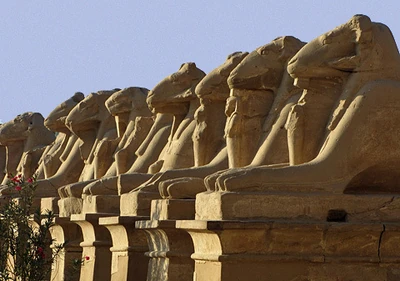
Criosphinxes are the ram-headed lesser cousins of the legendary Androsphinx and Gynosphinx. They share neither the magical abilities nor the inhuman intelligence that these beasts are known for, instead relying on brute force to get the job done. They exhibit an almost draconic attraction to treasure, and seek to hoard it wherever they can - including relieving adventurers of their valuables by force.

Had you heard of the Criosphinx?! I hadn't! According to Blanca's research, statues of these guys line the way to the temple at Karnak. I think the design here is loosely based on the Sanctuary Keeper boss from FFX, which I got stuck on as a child. This isn't a particular mark of difficulty, however, as I didn't quite get the concept of grinding in an RPG so I got stuck on literally every boss of FFX. Feh.

Sunday, 26 April 2015

Manticore


Manticores are large, roughly leonine beasts that can be found in the hotter lands of the material plane. Possessing intelligence near that of an average human, they are far more cunning and cruel than other carnivorous animals. sThey spend most days hunting for food, which they relish in both killing and eating with the aid of their claws, toothed maw and barbed tail.

Also capable of human speech, manticores are sometimes mistaken for the usually better-natured sphinxes (with their human-featured heads and cat-bodies) - an error which is swiftly regretted.

Another monster with its roots in classical mythology, the manticore was one of my favourites as a child. It's typically depicted with a scorpion's sting in its tail (a trope I chose to sidestep just for the sake of trying something different) and as a long-time fan of bugs and insects I always sorta liked that little concession to monstrousness in an otherwise pretty mundane animal.

I know the head I have it is pretty weird, but I quite like how videogamey it looks. In hindsight I think I was channeling the bull charger from Okami.

Sunday, 19 April 2015

Lamia


The Lamia are a race of vaguely leonine centaurs which inhabit deserts. They are also fond of human flesh. The human half of the Lamia are exceptionally attractive. Well, possibly. Lamia are illusionists and charmers, capable of taking on human guise. Their touch also has a stupefying effect, making the effects of their spells all that more effective.

The illustration of the Lamia in the Monster Manual always kinda bothered me because everybody knows Lamia are snake-women duh Wizards. Well turns out the duh may be a bit on me. Doing a bit of research of the monster actually revelead a few things. For starters, there are numerous interpretations of what the Lamia looked like, among which is a woman who is a snake from the waist down. But it seems like the D&D Lamia was inspired by the Lamia from Topsell's The History of Four-Footed Beasts, a 17th century book, though that illustration may have been inspired by an even earlier one. Helps make it a bit different from Medusa and Naga.

The Greek myth of the Lamia is actually a somewhat interesting and confused one. The bare bones is Lamia is a Lybian princess who has the misfortune of catching Zeus' eye. She gives birth to babies, Hera kills her babies (and makes Lamia eat them), and Lamia is driven mad by grief and rage. She feels compelled to steal children and devour them. At some point she turns into a monster, the physical appearance of which is left vague. Also she can't close her eyes, but is able to remove them from her head. From that point on she tends to get mythologically confused with drakainae (female dragons), and empusa and lamaie (succubi and vampires). The Greek gods were jerks.

So the Lamia is one of many monsters seen worldwide throughout folklore: that of a woman who loses/kills/eats her children and goes to do the same to other children. La Llorona seems like the most modern version of that archetype, though I wouldn't be surprised if there were urban legends that followed a similar narrative pattern.

Sunday, 12 April 2015

Cockatrice


The Cockatrice, despite being on the small side and having little physical strength, can be a dangerous creature to contend with for even seasoned adventurers. Around the size of a small pony, it can attack with its claws and beak with some ferocity if angered. More problematic by far, though, is its magical gaze, which can instantly turn the recipient to stone.

The Cockatrice would doubtless be a less famed creature if not for this ability. Its body, an absurd amalgam of drake and cockerel, poses little threat to a well-armoured combatant, and its intelligence is animalian. But the Cockatrice is relatively common, and can be found in small flocks in many parts of the material plane, and where they do congregate near human habitation, they can pose something of a serious problem.

Hey! Joe here, haven't posted in a while (maybe a year now?) but I'm making a concerted effort to get back into the swing of things. Honestly I've started and left unfinished about four drawings for the blog since my last post, but for some reason I developed a really sheer artistic block about D'n'D and couldn't finish anything at all. It sucked! Obviously Blanca's incredible for keeping everything going for so long, with my various hiatuses I think the blog's success definitely owes more to her ability and resilience than anything. So thankyou Blanca! yaaaay

but yeah, hope you like my Cockatrice. Chickens are great fun to find reference images of, particularly the big fluffy fat-looking ones. For pop-culture depictions of Cockatrices the ones in FFXII are some of my favourites!

Sunday, 5 April 2015

Phase Wasp

Though with a name similar to the Phase Spider, the Phase Wasp is called as such not because it can travel between dimensions, but because it can attack between dimensions. Your ordinary Phase Wasp is a creature of the Material Plane, a magical insect about a foot long (yikes), but without the venom that ordinary wasps have. Instead, their stinger shoots bolts of force, as per the magic missile spell, which allows it to hit creatures whose bodies are in the planes which are overlaid over the material. The wasp also has the natural ability to see invisible creatures which, again, helps it defend itself against etheral creatures.

The source of the Phase Wasps' magical powers are not explained, but I have my own theories. Like ordinary wasps, these dudes make their nests out of chewed wood pulp and paper. They have a special fondness for making them out of the papers of spell books, which makes a Phase Wasp infestation especially bothersome for mages.

So my theory is that Phase Wasps at some point in the past were ordinary wasps just looking for materials for their nests. A couple of conveniently available magical libraries you have a new breed of giant magical super-wasps. Thanks a lot, wizards.

Sunday, 29 March 2015

Spirit of Air

The Spirit of Air inhabit windy cliffs, barren mountain tops and stormy forests. Though their name would imply otherwise, the Spirits of Air aren't heavenly creature, but the earthly servants of the divinities who have power over the winds and tempests. The Spirits are aware of their position in this hierarchy and their simian influence means that they're not above trickery over lowly mortals. The Spirits are easily offended, which is a bad thing when they have the ability to turn themselves into whirlwinds. Just be humble when you spot them and maybe you'll be okay.

 This is one of those creatures that I always skipped over when leafing through the books to find something to draw. Mostly because it's a stupid yellow monkey with stupid bat wings. But the dice demanded I draw this guy so I did.

And so it turns out Spirits of the Air are actually quite cool. Their spells leave something to be desired but they're suggestions rather than something written in stone. Their spell-like abilities are better (call lightging all day, erry day), and their ability to transform from weird bat-monkey into a tornardo is pretty dang cool.

Also these are Large creatures (10ft wingspan), which I didn't feel the illustration in the book communicated very well, especially when you think of winged monkey you think of those dudes from The Wizard of Oz. I think I did okay making this guy look bit, even if he's turned out a bit draconic. Also had a struggle a bit to not make him look like Momo from Avatar: The Last Airbender.

Sunday, 25 January 2015

Leskylor


Leskylor are among the natural fauna of the Blessed Fields of Elysium, making their homes in the caves nestled in wind-shorn peaks. Leskylor are prone to a particular type of mutation, that of multiple heads. Up to three-headed Leskylor have been spotted by dimensional travellers in Elysium. Which of course makes them all the more dangerous, as even a one-headed Leskylor is able to breathe out cones of bitter cold. These blue winged tigers are as independent as their ordinary mortal cousins, but vastly more intelligent and a useful ally against the forces of evil. They have a number of heavenly abilities which let them unearth any hidden evil-doers and move them to (temporary) repentance.

If I'm honest, I just wanted to draw a fat tiger, really.

Also, we've (finally) purchased a copy of the 5th Edition D&D Player's Handbook, and while it's really simplified down, it does still seem appealing to me. Especially the artwork. The art's crazy gorgeous in this book. A big reason why I didn't get into 4e D&D is just the artwork in the Player's Handbook was not really my cup of tea. Maybe it improved in future books, but I wouldn't know. Let me tell you though, if they release the Dark Sun setting for 5e, I will definitely definitely be running some of that.

We play mostly Pathfinder in our group, though I do want to branch out into other systems. We've already experimented with the Savage Worlds' Deadlands: Reloaded setting (mixed results, but I really like the setting), and the next time I get to DM, I'm running a Call of Cthulhu game. Although it just illustrates my luck that I go out an purchase the 6th Edition Call of Cthulhu handbook when 7th Edition is about to come out and is apparently the one that's making the most changes to the actual rules of the game. Have also been eyeing with some interest Legend of the Five Rings, Numenera, The Strange and Nobilis. Must hold off though, as I have limited time to play and also limited shelves to put books on. And pdfs are nowhere as nice as material books.

Anyway as I was saying, 5e Dark Sun plz.