An ongoing project by Blanca Martinez de Rituerto and Joe Sparrow.

Follow us on our offical Facebook page!

Buy Our Books!
Showing posts with label book: monster manual. Show all posts

Monday, 3 December 2018

Green Hag

Don't go into the woods after dark.

Make offerings at the temples of the travel gods, hold onto your talismans, wear your shirt inside out and carry a hazel stick.

Don't got into the woods after dark.

Do not acknowledge cute little old ladies, beautiful women or lost children. Do not heed the weeping in the trees, or the laughter, or the cries for help. Do not follow the swaying of lanterns in the darkness. If your friend left the path, they are gone. That is not their voice you hear.

But most of all don't go into the woods after dark.


Monday, 26 November 2018

Goblin


By many, goblins are considered less a race of small humanoid creatures and more a universal constant or a force of nature. Noisy, smelly, and worryingly numerous, they are a constant nuisance to any and all around them (though never catastrophically so). With nests across the multiverse, they have been likened to the common cold - in that what they lack in raw destructive power they easily make up for in hardiness and resilience to extermination (much to the chagrin of the more "cultured" civilisations who they revel in bothering).

-

I think my favourite goblins are Magic: the Gathering goblins, mainly due to the extent of their ineptitude (there's a running gag where goblin cards will do... like the opposite thing they ought to do - see Goblin Diplomats) and also their propensity for infighting and (*cough*) self-sacrifice. Plus, they're one of those creature types where you can easily flood the board with them, and my inner timmy lights up at the thought of swinging for lethal with 10,000+ goblins as facilitated by someone like Krenko.

Anyway! These goblins are inspired by Blanca's old 3d designs for goblins, which are slightly puggy, but also by the miniblin enemies from Wind Waker. I guess with the knobbly bits on their heads you might mistake them for some lesser devil or other, but from a folkloric perspective I think goblins/imps/bugbears/devils are all cut from kind of the same cloth, so I don't really mind.

Joe's tumblr


Monday, 12 November 2018

Mimic (Redux)


Of all the aberrations that have squirmed their way from outside time and space onto the material plane, there are none quite like the Mimic. It is certainly not the greatest of them, nor the most powerful (either in raw strength or intellect). Yet it is (at least to the average adventurer) one of the most feared, and rightly so.

The thing that sets Mimics apart from most of their alien brethren is that most aberrations come into our world with little to no understanding of it; or, if they do comprehend our ways, they simply do not care. Creatures like the Gibbering Mouther, the Grick, or the Choker - these fiends hunt, kill and feed almost mindlessly, making full use of their evolved weaponry but without the slightest concern for the humanity that fears them.

The Mimic, however, is more insidious. It has learned the habits of humans - particularly the foolhardy breed known as "adventurers", who are fond of going out into the world in groups of only five or six - and is capable of... well, mimicking any object that might serve to disguise itself until prey draws close, ensuring a quick death to any who fall into its trap.

Some have claimed that the Mimic is like any other camouflaged animal - that its transformations are merely opportunistic, dumb imitations of form simply to hide from prey. But seasoned hunters swear differently; that within each Mimic's actions there lurks a streak of genuine malevolence, or, even worse, dark humour. What's more, survivors of one Mimic attack will often become obsessed by the threat of another - every pot, chest and chair becomes a potential threat that must be investigated thoroughly. More than a few such adventurers have descended into madness.

-

This one's inspired by the various breeds of octopus that can alter the colour of their skin (as well as - seemingly - its very texture) to more effectively camouflage themselves. There's a specific breed known as the Mimic Octopus that adds another layer to this subterfuge by actively pretending to be other creatures - poisonous sea snakes, flatfish and lionfish to name a few examples - in order to scare off predators.

I spent a while trying to grade the transition from tentacles into wood so that it was sufficiently smooth. I'm not sure if I like it 100% but I at least enjoy looking at it for the colours right now! For some reason I really like using blues and purples for wood.

Joe's tumblr

Tuesday, 30 October 2018

Wyvern


Any village swineherd who has heard more than a single story about dragons is likely to come away with some half-formed impression of their grandeur. There's an argument to be made that this plays into the scheming of the dragons themselves - famously vain creatures that they are - but there is simply no denying that, by and large, drakes are a noble breed of great physical beauty. Chromatics: vast, snarling, scheming creatures, studded with scales of scarlet and topaz... Metallics: even larger in size but wise and meditative, sheathed in lustrous snakeskin like spun silver and gold... even the so-called lesser breeds, shoots that deviate from the stem of dragon-kind, usually retain some faded glimmer of their more magnificent cousins. Usually.

There is, they say, no beast that will quicker dispel the illusion of dragons as creatures of nobility as the Wyvern. Like a gangly, embarrassing cousin they are rarely acknowledged by the "true" breeds, yet they are far more numerous, which speaks, perhaps, to their pigeon-like success at populating the world.

Compared to the average Chromatic, the Wyvern is a stunted, bony parody of a dragon. Its body is barely larger than an elephant, its intelligence subhuman. Its scales range from mottled brown, through half-formed greens to pale, sandy yellows and whites, depending on its surroundings - the idea of camouflage is anathema to full-blooded dragons, but Wyverns will take their advantages wherever they can get them. Finally, and most markedly, Wyverns at some point deviated from their greater kin in the loss of their draconic forelimbs. This seems not to have affected them much, however, as they continue to scramble about deftly using their wings.

-

Wyverns are great! This was fun to draw. I hope you like it!

Joe's tumblr

Sunday, 14 October 2018

Kraken (Redux)

"...Child of dark! Herald of void!
First-created of the gods, or else their elder!
We know the truth: the world above the waves is nought but wan reflection of thy realm,
and we merely its fragile custodians.
O! Drown the world! Snuff out the stars!
We beseech thee, Great One, that all might hear thy song
Borne endless 'cross the sable deeps!"
- Extract from the Holy Book of the Water-folk, Chapter 27 

So this is actually a redo of an old Dungeons & Drawings design that I did waaaaaaayy back in 2011! Go look at it if you want to see an example of the old slightly janky pixelart I used to do! I didn't think it was very good, even at the time, so I decided to redo it but still try and sort of... aim for the same feeling that I was going for before? If that makes sense? I think I succeeded to some extent.

I've always had a pretty deep-rooted fear of the sea, which I don't think is uncommon. I don't know if this was fuelled by anything (I suspect it was influenced by something I saw on TV or in a film) but I used to have a lot of nightmares about the sea, particularly tidal waves (like, cartoonishly large ones) and just the idea of big creatures either emerging or (sort of worse) lurking immediately underneath the surface. I actually went through a period of not wanting to do back-stroke at my swimming classes because I kept visualising something big "behind" me, under the water (yes, even in a swimming pool).

Krakens, Leviathans and other giant sea-creatures are likely to be encountered more as an environmental hazard than a traditional D&D fight, but I think their sheer scale makes them a fun (if terrifying) element to chuck into your game. I love giant monsters. I'm not, like, a big kaiju fan or anything like that, but I find there's something really compelling about a creature so big that it could destroy your life, your house, your city without even realising. Krakens also have the benefit of having a certain Lovecraftian mystique to them, emerging as they do from the inscrutable deep.

There's a persistent fringe theory about either octopi and/or squid being somehow descended from extraterrestrial life, and while I don't buy it myself, neither species does much to properly disprove it. They're pretty weird.

Joe's Tumblr

Monday, 6 August 2018

Hell Hound


Hell hounds are the canine companions of the servants of the denizens of Hell. Bred for size, viciousness and trainability, hell hounds can grow large enough to be used as mounts in the eternal wars between Hell and the Abyss. Wild hell hounds can also be found in wandering in packs throughout this evil plane, and while they're scrawnier than their tamed bretheren, they're also much more cunning.

Evil wizards and warlords will often summon or otherwise procure a hellhound for their own destructive needs. However, the hound's fiery breath and sulphurous smell makes them extremely hazardous to the very flammable Material Plane. Summoning, though only short-term, is probably the more sensible option if you have the means. Otherwise be ready to build stone pens. And make sure that you use good lucks; though beastly, hell hounds are smart enough to work out simpler locks.

Other wizards, fervent seekers of higher truths, also summon hell hounds in an attempt to answer a frustrating question:

Can this hound be a Good Boy when they are, by definition, a Very Bad Dog?

Blanca’s Tumblr

Monday, 2 July 2018

Mummy

The elvish archaeologists who broke open the tomb of Ilexandra, Fifth Mage-regent of the Riverlands, were overjoyed at their find. As according to custom, her body was found cut into pieces, wrapped in spider-silk cloth and interred in five jars alongside her royal scepter - attuned with a spell allowing control over lesser undead - and an ornate jade death-mask carved with five eyes to denote her lineage. They supposed the discovery - complete as it was, and perfectly preserved - would surely be hailed as one of the greatest of their age. 

The chief archaeologist's journal entry for the day notes the faint aroma of a lingering magic spell over the long-dead queen: "Most likely a charm to prevent decay, and perhaps discourage interference by the giant subterranean mole-rats of the region."

The journal was found almost a week later by a search party, amongst a pile of broken equipment, torn clothing and inexplicably rusted weapons found just outside the tomb. No bodies were ever found, but since the Old Elvish words for "KEEP OUT" had been daubed on the great stone door (apparently in fresh elf blood), they never actually set foot inside ever again.

Wednesday, 30 May 2018

Nymph


Nymphs are a type of female spirit that acts as the fairy guardian of wild places. They're all generally described as beautiful, sweet-voiced and fickle. While nymphs can inhabit any natural place (trees, rocks, etc...) your standard nymph tends to live near freshwater pools or rivers.

As with many other fey spirits, nymphs prefer to remain hidden from mortal eyes, but that doesn't make them harmless. If they feel their territory is in any way damaged or disrespected, the nymph's revenge is swift. Animals, plants and the weather are her allies, and she won't hesitate to use them. However, calling attention to yourself by being especially reverent isn't the best course of action either. While you may receive blessings from the nymph, she can also become possessive and demanding, or inspire such love and pity in her that she will try to capture you to keep as a pet.

Some nymphs have been known to make their homes in dangerous, rocky places, and take delight in luring mortals to their deaths. These tend to be the favoured daughters of powerful nature spirits, who can count on their father's magic and rage to protect them from any retribution that may come to them.


I know nymphs are good aligned creatures, but a nymph can totally make a decent final boss for a low-level campaign. The D&D nymph has some pretty great and pretty crippling abilities. Besides a number of defensive and offensive spells, nymphs can't be looked at directly, since doing so can result in a character being permanently blinded by how crazy pretty they are. A thing that seems a bit weird is that they don't actually have charm person or any of those enchantments, but whatever.

I don't think this particular nymph would be considered blindingly gorgeous by anyone, but you don't know what fairy magic can do to the mind.

I went for a slightly more insectile look with this gal. Specifically dragonflies. Dragonflies are pretty.

Blanca's Tumblr

Wednesday, 14 February 2018

Succubus

Of all the demonic denizens of the Abyss, the succubus is admired by mortals because it usually appears in the shape of someone especially desirable. Of course those mortals are very, very stupid if they think they're going to get a good time from this demon without having to give anything in return. The succubus is, after all, a soul-sucking monstrosity. They feel like ice. You will not have fun. Then you'll die.

Every culture has its version of the succubus, that is to say the seductive, disease-bringing, man-eating demon that serves as a warning against getting yourself some strange. The male equivalent, the incubus, isn't quite as common and usually extra rapey.

Some Christian texts claim that the incubus and succubus are the same demon shape-shifting between male and female forms. Angelic and demonic beings are supposedly unable to procreate the biological way. To get around this, the succubus steals semen from her victim, then shapeshifts into an incubus to impregnate a female victim. Despite the human source, the demonic transportation ensures that any child born of this union isn't completely human. Merlin is said to be the result of a union between an incubus and a human woman.

Something I really resent with depiction of succubi/incubi, especially modern depictions, is the focus on the sexiness of the demon. It's very much an "ooooh nooo, I'm getting seduced by this hot chick/dude with horns oh wellllll..." with none of the "btw this is sexual assault it hurts i'm literally wasting away please call a priest" part of the legends. These sex demons were associated with nightly emissions, sleep paralysis, sexual anxiety, rape... There's a reason these guys go after you in your sleep. So I really wanted so create a really repugnant image. Something that really showed the predatory sexual horror that this demon is supposed to represent.

Happy Valentine's Day!

Blanca's Tumblr

Wednesday, 10 January 2018

Animated Object

Animated objects come in all shapes and sizes. And while, say, suits of armour, weapons and doorways may be of more obvious value, sometimes smaller objects are the ones gifted with motion. Though maybe one can see how living bobbins and needles would be useful to an especially busy tailor.

These objects aren't technically alive, making it somewhat easy to maintain them. So long as one has the relevant skill (sewing, carpentry, metalworking...) keeping your animated servant going is relatively easy. The difficult part may be finding a spellcaster with the relevant magic ability for it. Or maybe you can come across the leavings of a ravid.

Animated objects generally aren't sentient, but faerie magic and children's wishes can alter that.

Blanca’s Tumblr

Tuesday, 31 October 2017

Ghoul

Sometimes ghouls get lumped together with zombies. They're dead, they eat flesh, they're just a bit meaner, right? Well, zombies happen because of external circumstances (spells, curses...) and are mindless, so that's not right. They're not the same as revenants, another species of intelligent undead, since they're not motivated by revenge, anger or any sort of emotion.


The ghoul rises from the dead because it's hungry.

Those who practice cannibalism risk becoming ghouls. Now, this seems like an easier path to immortality than, say, discovering the philosopher's stone or going through all the tedious rituals to become a lich. Just eat a few orphans and homeless people and that's eternity for you, baby. An eternity of being hungry. But if you're the sort of person that would happily chow down on your fellow man, then you're probably not the type to be disappointed in the results. You don't get magical powers, but you get some poisonous claws so that's neat I guess?

Did a buncha research on ghouls, because I know they're a folkloric beast that's undergone quite a bit of transformation over time. I already knew they were an Arabic beastie (a ghûl), with them appearing in the Arabian Nights stories -- spooky monsters what hide in graveyards and eat corpses. What I didn't know is that that version of the ghouls are a mistranslation-slash-fabrication by the translators of the original texts. Early ghouls were more like demons or evil jinn that lived out in the desert and lured travelers to kill them. They were also often feminine, shapeshifters, and used as boogeymen to scare kids. Pretty much a generic monster that appears in every culture in the world.

But the Westernized version has stuck so that the ghoul as a skulking male/genderless grave-robber functions as today's definition. Lovecraft went in a bit of an interesting thing with them, making them appear less and less human the more time the ghoul has spent unalive.

Happy Spookoween, peeps.

Blanca’s Tumblr

Monday, 30 October 2017

Zombie


Zombies are perhaps the quintessential undead. Their ubiquity is due in part to their flexibility - anything that lives, dies. Anything that dies, can be raised as a zombie. Zombie humans, zombie dogs, zombie ogres, zombie dragons; all are potential foes when facing a necromancer of sufficient power.

In terms of necromantic finesse, however, zombies are pretty near the bottom of the barrel. An extremely quick fix to a deeply profound problem (death), they are often little more than hastily-recruited servants, capable of a narrow portfolio of limited tasks (such as biting adventurers, or carrying trays) and fall apart at the slightest pressure. Outside of amateur necromancy (where zombies and zombie-like efforts are drearily commonplace), zombies are rarely used except as a "meat shield" (grisly literal in this case) to absorb an attack, or as a swarm to overwhelm a weakened foe.

First post for me since the Colossus, which was ages ago! Oy. I actually did an earlier version of this but I didn't like it so I completely did it over. Maybe I'll post the other one sometime. It wasn't very good, though. I think both Blanca & I avoided zombies as a Dungeons & Drawings subject for ages because... zombies are quite ubiquitous as a subject of illustration? I hate saying stuff like that, but... I don't know. You just see them kind of a lot, I guess. My theory is that they're fun to draw because you can make them as ugly/deformed as you like and they don't look weird (you don't have to sweat proportions too much), and they are quite well served by relentlessly adding detail (wrinkles, wounds etc) - which also serve to mask any structural inaccuracies. Case in point - I only realised at the end of drawing this picture that the zombie's right foot is backwards. In any other humanoid creature that would be grounds for another tiresome redraw, but with the zombie - you can just explain it away by saying something like "oh, this zombie was just assembled poorly". Brilliant!

Anyway, Happy Halloween y'all!

- Joe

Tuesday, 3 October 2017

Bearded Devil (Barbazu)


Bearded devils, called barbazu in Infernal, are on the lower end of the mid-level hierarchy of Hell. As such, they get to be squad leaders. However, since their squads tend to be made up entirely of lemures, it's more like herding and goading irritable sheep. Their short tempers make them ill-suited for greater command. The barbazu itself is quite dangerous, however. Their primary weapon is a serrated glaive which causes persistent bleeding, requiring especially powerful healing magic or skilled surgery. If somehow deprived of their glaive, the barbazu has a not-so-secret weapon: it's eponymous beard.

The barbazu's beard is covered in disease-bearing toothy tendrils. Despite its wormy appearance, the tendrils are not prehensile. Still, the devil's use of them is suitably horrifying; it gets a good grip on a target with its claws and forces them face-first into its gruesome beard, forcing them to endure hundreds of little scrapes and bites. Should said target survive an encounter with the barbazu, they develop a fever which slowly saps them of their strength. The victim becomes too weak to even breathe and suffocates.

A creature we've encountered in our current campaign, as part of Vecna's troops. I've used on myself in a previous campaign, where a character was eviscerated by its claws (no chance for a beard attack). The glaive is a neat weapon, obviously, but nowhere near as colourful as the claw-beard combo. Even though the potential maximum damage of the glaive and claw-beard attacks are essentially the same, I guess the subsequent bleed damage of the glaive puts it over the top. Still, it's kind of a shame.

Notes on the design here. In the books I have (3.5 and 5th edition), the barbazu's beard is described as being snakey. In most illustrations I've seen, this has been interpreted as thick tendrils with pointy ends, like a barbed snake's tail. I decided to go more for the head end of the snake because it's so much more gruesome to have lots of little mouth nibble-nibble-nibbling at you. They turned out a little wormy though. Originally the design had a big mouth as well, but I took that away too. Now instead of having one big mouth, the barbazu has dozens of itty ones. They came out looking more like earthworms than snakes but shhh.

Maybe I should've forgone the single eye too and made it just a blank face, with the beard having his eyes. Lots of little eyes and teeth. Nibble nibble nibble.

Blanca’s Tumblr

Sunday, 2 July 2017

Barghest


The barghest is the particular flavour of hellhound that stalks the ashen slops of the Bleak Eternity of Gehenna. The barghest is especially ugly, looking like a bulky mangy wolf with goblinoid facial features. This beast is capable of shifting between a fully lupine and fully goblinoid form, but primarily stays in its hybrid body.

What makes the barghest a challenging opponent is its stealth capabilities. While it can't fly, it can surpass obstacles by levitating. It naturally leaves no marks of its passage and high-level spells are needed to detect nearby individuals. Larger barghests can also render themselves and members of their pack invisible. A barghest grows by consuming the corpses of humanoid victims, eating flesh and bone so nothing is left. The scant availability of puny mortals in their volcanic dimension means that any unfortunate interloper will find themselves greedily sought after.

The Barghest is one of the many names that the ghostly black dogs of British Isles. This particular name originating from Yorkshire. Other national variants include the yeth hound (Devon and Cornwall), Gwyllgi (Wales), Moddey Dhoo (Isle of Man), Grim (Lanchashire) and just so many spelling variations of Black Shuck. Black Shuck may be the most famous of these names, but I can't be sure. All of them are large ghostly dogs, black-furred with glowing red eyes, and death omens. The Hound of the Baskervilles was inspired by these legends. The name "barghest" is the one I was most familiar with because it was in a book of mythical creatures I had as a kid. I can't remember the title though. I had a lot of these books.

I'm not sure where the whole shapeshifting into a goblin thing exactly comes from; I've only found once instance of a legend that claims that black hounds can shapeshift. My closest guess is that somebody read the term goblin-dog ("goblin" meaning "monster" rather than your contemporary fantasy Tolkein goblin) and went with that.

Blanca's Tumblr

Sunday, 18 June 2017

Azer

It's unclear whether the dwarves of the Material Plane and azers of the Elemental Plane of Fire are related. Both have a similar physical appearance and mode of thinking; both are short and stocky, bearded, diligent, regimented and master craftsmen. Was there a common ancestor? A dwarf that wandered into the fiery dimension, or an azer that cooled off here? Did the same gods create both? Or is it just happenstance?

The azers are one of the most prominent races on the Plane of Fire, a distinction they share with efreet and salamanders. However, of these three races, the azer are the weakest and their lives are a constant struggle to avoid becoming slaves to the efreet.

The concept of Elemental Planes is always a little bit difficult to wrap my head around. Like, shouldn't the Elemental Plane of Fire be exclusively fire? Should the Water one be just Water, Earth solid Earth? Isn't magma just liquid earth? Isn't smoke and ash hot air and dirt flecks? These dimensions always have a sky and ground and so on.

It's overthinking it, I know. It's magic and fantasy and stop dragging in real world logic into this, everybody knows Fire, Earth, Air and Water aren't real scientific elements anyway jeez. I guess these planes are just supposed to be most the -iness of the element than the element in its purest form. A mirror to our world, only the mirror's set on fire. Maybe there's a core of pure flames, but the rest of it's more of a Plane of Fieriness, fiery landscape, fiery creatures, fiery personalities, what Fire represents rather than just was Fire is.

Welp, worked that out for myself while writing. Good talk, guys, the next round of molten sulfur is on me.

Blanca’s Tumblr

Monday, 29 May 2017

Merfolk


Of the sentient races that occupy the ocean, the merfolk are the most numerous, or at least visible. Merfolk are as fascinated with humans as humans are with them, most likely due to a physical resemblance combined with the allure of foreign lower body. However, any closer relationship between them is stymied by environmental requirements, though there are many stories of individuals using magical means to overcome that hurdle. Normally a marine race, freshwater variants have been sighted living in especially large lakes.

But the mischievous and playful nature of the merfolk doesn't mean that they're entirely harmless. Humans who abuse their waters or aren't careful with their nets will find their boats more likely to sink, or suffer greater punishment as the merfolk appeal to their own watery gods.

Yay, I got this done just in time for the end of Mermay!

There's a lot of legends about mermaids, but not so many that I've found about mermen. You get plenty of romances between fishy ladies and human men, but not so much the other way around. The British Isles have a whole buncha merfolk stories that mention the male half of the race, but while the females are pretty, the males tend to be less attractive (a design trend that continues to exist to this day). Think of it as the difference between the Zoras and River Zoras in the Zelda games.

Blanca’s Tumblr

Monday, 30 January 2017

Allip


Ghosts are created when the person's death happens when there's unfinished business in the world of the living and/or under especially traumatic circumstances. The allip is specifically the ghost of someone who was driven to madness and, eventually, suicide. As a result, the allip is both insane and vengeful, focusing its attention on those it blames for its traumatic death.

The allip can't communicate verbally, but babbles a constant stream of nonsense noise that attracts the attention of anybody that hears it. This ghost is completely incorporeal, but those who have been "touched" by the insubtantial shade report a cold shrivelling in their brains, similar to the feeling that mediums have reported when attempting psychic communication with it. If the allip has focused its attention on you, it's impossible to escape without divine aid.

Allips can be confused with banshees, a similar wailing, vengeful spirit. However, allips have no discernable gender and their voice is nowhere near as deadly.

Moving on from constructs (for now)! Allips are a monster that gets complained about on occasion because its abilities are what is called "save or die". Essentially, creatures have attacks or abilities which are normally countered by your own defenses. An orc with a club will have to bypass your armour in order to deal damage, a dragon's fire breath will have to bypass your Reflex (itself your natural dexterity plus any bonuses you have). But an allip's Madness ability has no save against it, and its incoporeal touch only has to phase though armour. While they deal no physical damage, the allip's attacks deal ability damage, your stats instead of your HP. As a low-level monster, you're probably not going to have access to the means needed for healing your stats. Meaning that in 4 hits an allip can essentially render your character unplayable by reducing it's Wisdom stat to 0, driving it insane.

If you see an allip, run.

Blanca’s Tumblr

Sunday, 1 May 2016

Angel, Planetar


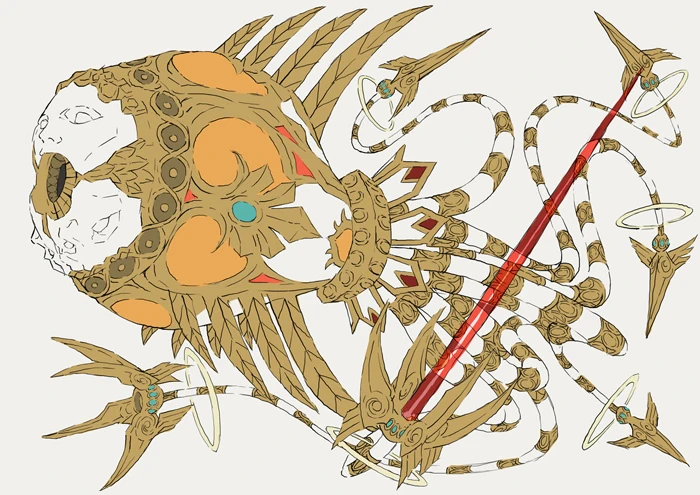
Planetar are but one facet of the many-sided jewel that is the angelic hierarchy. As a manifestation of goodness and law, angelic beings function as wardens against the spread of evil and chaos throughout the planes, and Planetar serve as elite soldiers in that battle.

While angels are without exception good-natured and compassionate beings, Planetar see it as their primary purpose to destroy evil wherever they find it - often with a violent fervour that other good beings find shocking. It is worth remembering, however, that as interplanar beings, Planetar have seen and experienced much that mere mortals never have or will. It is not inconceivable, therefore, that they are acquainted with far more powerful and malicious beings than will ever trouble the material plane, and that while their dogmatic attitude may seem unreasonable to us, their presence in the multiverse guards against many far greater evils.

---

Considering how much of a stereotype they are, I'm weirdly fond of both angels and their demonic counterparts in fantasy. These days it's rather common to put the whole "both bad but for different reasons" spin on it, where neither the angelic nor demonic powers are shown to be fully in the right, and some shade-of-grey via media is (perhaps somewhat patronisingly) offered as the "correct" choice.

While the allegory serves to demonstrate that dogmatic adherence to a way of being can be toxic - for example, the angels and devils in the Sandman series, or in Spawn, or even Bayonetta* (angels are beaurocratic pedants, devils debauched sadists) - it's fun to look at how and why each "side" justifies their actions. I quite like it when, as in settings like the Warhammer 40K universe, the "good guys" (the human Emperor and his minions) are capable of some truly horrible stuff - but the threat of Chaos is so much worse that you can kind of see how they justify it to themselves.

In D&D this kind of relates to the alignment system, too. Angels are Good, devils & demons are Evil. A lot of debate comes up around what is even meant by either descriptor; for what it's worth, I'm most comfortable completely separating Good and Evil as D&D concepts from good and evil as ethical ideas. Good, in the context of alignments, I take to simply mean "selfless". They do stuff for others more than for themselves. Evil means "selfish". Under this definition, a Lawful Good character can still be unpleasant, can still be horribly violent, can still be an utterly horrible addition to a party. Granted, in many instances this won't be the case, but I think the possibility for a nasty Good-aligned character (and, by extension, a nice Evil-aligned character) makes for interesting characterisation.

When I was colouring this I realised it reminded me a bit of Undyne from Undertale, which I was prepared to chalk up to unconscious plagiarism but then I checked and the first sketch of it was from March 2015 - before the game released!! In related news: this one took me a long while to get comfortable with. I gave up on it for a while, then happened upon the sketch again recently and decided to try finishing it. I think it's ok, although I still don't feel like I've quite zeroed in on the correct amount of detail for these things.

Joe's Tumblr

*NB: I have been playing a lot of Bayonetta recently and I'm super fond of its concept art can you tell????

Sunday, 17 April 2016

Avoral

Avorals are one of the many Celestials who fight against evil. The avoral is strong (it has to be to flap those wings), yet light and swift. Its touch can heal the worthy, and it can telepathically communicate with all animals. However, the avoral is best known for its amazing sense of sight. It can see through all disguises, even invisibility, and can make out details from miles away. They make excellent scouts for the forces of good, is what I'm saying.

Sorry about how slow Dungeons & Drawings has been lately, by the way. It's been a busy few weeks job-wise and social-wise, not leaving that much time for personal drawings. The last couple of images were a bit of a headache to do, what with the necrophidius having all those dang little bones and the legs on the avoral just not being quite right for the longest time.

Anyway, I should hopefully have some time to get a few images done in advance.

Special news for you Canadians out there. Dungeons & Drawings and Joe Sparrow Comics will be at TCAF next May! Huzzah! We haven't done a con outside of England before, so we're quite keen to see how they compare. Hope to see some of you guys there.

Blanca's Tumblr


Sunday, 25 October 2015

Homonculus

Homonculi are the messengers and spies of those who wish to remain unnoticed (or at least inconspicuous). Made by wizards either for their own purposes or else to be sold to others, the tiny artificial creatures can be made from any number of materials as required, and can vary wildly in their appearance depending on the task they have been built for. One thing, however, that unites construction of all homonculi is that they require a generous portion of the creator's blood.

"Homonculus" is a pretty broad term in pop culture, commonly used to mean a sort of golem or constructed servant but with plenty of flavourful variations. One particularly wacky take that comes to mind is in Full Metal Alchemist, where homonculi are near-immortal, super-powerful (but otherwise human-passing) created beings that fill out a good portion of the main cast. The D&D version is closer to the real-life history of the term (which is a pretty fascinating wikipedia read) and I think I prefer it.