An ongoing project by Blanca Martinez de Rituerto and Joe Sparrow.

Follow us on our offical Facebook page!

Buy Our Books!
Showing posts with label CR 8. Show all posts

Monday, 19 November 2018

Storm Elemental


Storm elementals are pretty much perky air elementals. They may be slower, but they pack quite a bit of zap, especially when you get to the bigger ones of the bunch. The little fellas can be pretty useful as a summoned ally, since their attacks actually deal sonic and electric damage at the same time. If one bit of hurt can't get through, the other one probably will.

They may well be the reason why airplanes and such never quite took off in fantasy worlds. Magical airships maybe have some kinda magical protection against storm elementals coming along and puncturing their balloons.

I like to think of these guys hanging around blue dragons, thunderbirds and the other big electric beasties of the sky, just hanging around them like remora on a shark.


Sunday, 10 June 2018

Corruption Eater


The corruption eater is a type of aberration that feasts on the festering evil that wears down the soul. Encountering a corruption eater is both a good and bad thing. Good because it can cleanse you of the aforementioned festering evil; bad because getting cleansed still really really hurts and it can get mad when there's no more food left. The corruption eater uses it's stretchy tentacles to immobilize its target, then wraps the victim up in its hole-filled tongue to feed.

So you know how the other week I was talking about all the alternate magicky-magic things that D&D has? Well the Heroes of Horror book introduces the concept of taint: the corrupting influence of evil magic which wears you down both mentally and physically. As the taint increases, you weaken gaining a number of penalties that can result in death or complete madness (essentially death since the DM takes over your character).

However, certain feats, prestige classes or types of magic are only available to characters that are suffering from taint. This can result in a delicate balancing act of making sure that your taint stays above a certain level without actually being killing you.

Taint can be cured with certain spells, but a lot of them are quite high-level or expensive, so I like to think that maybe some smaller towns have a corruption eater locked away for medical purposes. Kinda like a leech. Or evil chemo. Just stick your hand in this hole. It'll hurt for a while, but we'll pull you back out once your eyes regrow and you stop craving human flesh.

Of course having a corruption eater holed up in your town would probably increase the ambient taint of the area, since you're harbouring an evil creature. Six and two threes.


Blanca’s Tumblr

Wednesday, 8 November 2017

Hollyphant

The hollyphant is a celestial creature primarily associated with Chaav and Lastai, two gods of joy, acting primarily as their messengers. Most of the time a hollyphant is seen, it will appear as a petite flying elephant, about the size of a small dog. But if it needs to attack, it will shift into a giant, more threatening shape.

While small, the hollyphant is immune from all spells. It loses this protection when it shifts into its larger form, trading defense for offense. Despite the size change, it remains just as nimble both on ground and in the air.  It has as many magical spells, but it's main attack is it's trunk. As well as knock enemies about in it, the hollyphant can either release a shattering bellow or spray a shower of light (deadly to evil).

Note that both forms of the hollyphant are it's true form. If viewed through a true seeing spell, both its large and smaller selves will be seen at the same time.

This is one of those creatures that I always kinda rolled my eyes at when I saw it. The illustration of the big winged elephant thing is not that good. But then I noticed there was a CUTE TINY GOLDEN FLYING ELEPHANT hiding next to it and I was like yesssssss.

I chose to do this as two illustrations instead of one because the CUTE TINY GOLDEN FLYING ELEPHANT deserved to be more noticeable than it is in the book. Some liberties were taken with the design of the big form. It's supposed to have wings, but I like to think it can still fly with its ears. Just a huge bulk kept aloft by vigorously flapping tiny ears.

Blanca’s Tumblr

Sunday, 5 February 2017

Astral Construct (Agile Loper)


Psionics users (a.k.a. psychics) use a different type of power from traditional magic. Their powers are based on affecting their surroundings by exerting their mental powers to affect physical objects or other minds surrounding them. Generally, psionicists don't deal with the plethora of other planes that make up the universe. If they do, it'll be the Astral Plane, mind dimensions and dreams, and, on extremely rare instances, siphoning energy from the evil and good, and positive and negative planes.

Your tradional arcane and divine magic user is able to summon allies from other dimensions from other planes, pulling a physical creature out of their home plane onto the Material Plane. Psionicists can't do that.

But some psionicists achieve a close second. They can bring in ectoplasm from the astral plane and condense it to take on a solid, quasi-alive form for a few seconds or minutes. These are called astral constructs.

Some especially talented psionicists are able to make their astral constructs take on forms suited for specific tasks. The agile loper type of astral construct is made for speed and charges. The ectoplasm around the "head" is under great pressure, forming ultra-dense, very hard horns to knock down opponents so the construct can trample them underfoot.

Back to constructs!

This isn't a conscious choice, mind you. When I can't think of a creature I particularly feel like drawing, I use a system to randomly select one out of the monster manuals. I just happens that that same system sometimes gives me similar types several times in a row.

I really want to try out a game with psionics, but I've heard that they're notoriously unbalanced. Maybe if you run a game that only has psionics and no arcane / divine magic? I don't know.


Blanca’s Tumblr

Sunday, 10 May 2015

Treant


Treants are large plant-creatures that grow and shepherd plants and trees of the more mundane varieties. Tree-like themselves in appearance, they are often easily mistakable for the foliage they ward.

The treant combines the stoic toughness of ancient plant-life with the monstrous strength of large animals, resulting in a curious hybrid of tree and beast. Although typically slow and ponderous, if a treant's herd is threatened they are easily angered - and an angered treant is truly a sight to behold.

Treants are fun as a concept because of the fact that they mix traits from two of the most fundamentally differing lineages of life imaginable. It's fun to think about how the world would look if human, or even animal, intelligence had been achieved by some other branch of evolution.

Tree-men classically play off the idea that forests can be some pretty eerie places, especially given the odd shapes that you find trees contorting into (see Mandragora plants for some good examples). I based the swole body of this guy off the famous baobab trees of vaious places in Africa, although the body has all these little rooty growths coming off of it that are supposed to look like those little shoots potatoes grow. I also decided to go with making it overall less human-shaped and more like a big scuttling spider-thing. Blanca reckons it's a bit far from the traditional tolkienesque treant but I'm quite fond of it!

Sunday, 14 September 2014

EPIC MONTH: Shen Lung


The Shen Lung is one of many different dragons of the Lung type. Ordinary dragons are highly magical creatures, but in the end they are merely intelligent, large and potent beasts. The Lungs are inherently mystical beings allied to the elements who cross the boundary between the Spirit World and the Material Plane at will. Their powers come from a mystic pearl embedded in their heads (or brains), which allow them to fly without wings, riding the currents of air.

The Shen Lung (the Spirit Dragon) is among the lungs that mortals are most likely to meet, where all others prefer to remain hidden away in their celestial palaces or in the Spirit World. An aura of divine purity exudes from this dragon, repelling all verminous beasts that would dare approach it. It has special power over water and is often found near rivers inhabited by Chiang Lungs, whom they are bodyguards to. Pleasing a Shen Lung results in good harvests, while insulting one can lead to floods and blights, as it has control over the weather.

I like the traditional D&D dragons (blue and black are my favourites), but I have a soft spot in my heart for the lung type dragons. I think it's mostly the way they don't have wings but can still fly. There's just something quite cool about that. And the whole mystic pearl thing. Some Chinese (and I'm assuming other Oriental tales) feature the dragon's pearl being found by a human and then it bringing them good luck.

Some of you may recognize the name Shen Lung from the Dragon Ball series, where the 7 dragon balls (mystic pearls?) were gathered together to summon Shenron (or Eternal Dragon, or Shenlong) to grant the gatherer a wish.

The final image of Epic Month, which also consisted of the Phoenix, Phane and White Slaad. Using a dragon feels a bit like cheating, since dragons have more than one challenge rating depending on their age. But from 800 years onwards a Shen Lung is over CR 20 so that means it becomes an epic level creature so yeah.

Monday, 26 May 2014

Serpentflesh Golem


Serpentflesh is actually a bit of a misnomer when it comes to this particular type of golem; it isn't made exclusively from snakes. Rather, the serpentflesh golem is actually made up of any body part that belonged to any of the serpent reptilian races, which can include kobolds, lizardmen, yuan-ti, nagas, and similar races.

Essentially, a serpentflesh golem is almost exactly like the ordinary flesh golem (i.e. the Frankenstein's monster): it's a mindless construct immune to many forms of magic, save for those that deal certain elemental magic. However, due to the serpentflesh golem's inherent bodyparts, it's also venomouse, capable of delivering poison through any snake-headed section of its body.

The serpentflesh golem is meant as an insult to the scaled races. Most of the scaly ones are too proud to create abominations from their own flesh, and seeing the non-scaled races create these abominations makes their cold blood boil.

Also, animation because animations are fun.

Friday, 10 January 2014

Shimmerling Swarm


An individual shimmerling in a fairly unintelligent, harmless creature. Heck, a shimmerling swarm is a fairly unintelligent, harmless conglomeration of creatures.

Unless they're angry.

At first, the shimmerling swarm seems to be a cloud of pulsating rainbow light that can just about be seen between the trees. The light is strangely alluring. Hypnotic even. And it's not until you find yourself envelopped by that bright blinding light that you feel the sickening hum of vibrating insects wings and the splintery pain of tiny teeth and fingers biting any inch of exposed flesh they can find.

Fortunately, the shimmerlings primarily subsist on pollen. Which is yet another reason to leave the forest alone.

Here is my New Years-themed image, though perhaps you could say its more a wintery, Christmasy kind of image. Inspired by the fireworks, fairy lights (eh? eh?) and wrapping paper. I tried by hand at a tessellating pattern, a la Escher. Needless to say, it's not quite as seamless at the Escher ones, but it'll do.

When I think of the shimmerling swarms, the image that mostly comes to mind is the fairies from Disney's Fantasia, the ones that perform a part of the Nutcracker suite while putting dew on flowers, turning leaves orange and freezing water. Albeit the shimmerlings as statted are probably little more than fairy-shaped bees.

Sunday, 22 September 2013

REDUX MONTH: Gynosphinx


For the our final entry into Redux Month, we're redoing images that the other person did but didn't especially like. We wrote some lists for each other and picked one creture. I chose to redo the gynosphinx, an image Joe did about two years ago.

The Sphinx we're most common with is a unique Greek creature, famous for her "four legs, two legs, three legs" riddle. Fun fact: some sources say that the Sphinx was actually the child of the Chimera and sister to the Nemean Lion (slain by Hercules as his first task). Historically, the Sphinx is actually a Greek creation, has no wings and has the head of a man.  D&D has that one too, and calls it the androsphinx.

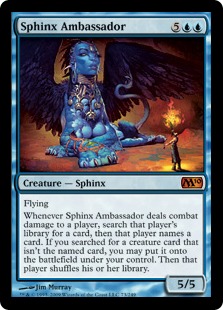
I was originally gonna do this Sphinx in blue as a reference to one of the prettiest sphinxes I've seen, the Sphinx Ambassador for the Magic card. But I couldn't make the blue work and a lot of stuff I've done is blue and I guess it probably would've been more a rip off than a reference. So red it is.

Thursday, 18 July 2013

Deepspawn


This was a blind challenge given to me by Joe.

I'd like to say challenge failed. It was bound to happen.

Which is a shame because this creature has a couple of interesting things going for it. It's essentially a big fat body with three tentacles, three claws and three open eyes (an undisclosed number of them being closed). So far, so aberrationy. But the interesting this about this particular monster is that its capable of creating a copy of any creature that it eats. This creature is completely loyal to it. Its lair is riddled with these monsters.

Which means that it's a good way for a DM to steal someone's character. Oh dang, you got eaten by this monster. Oh wait, your character's back, but he's my character now too bad.

The image that I've made is supposed to be inspired by two things: the female reproductive system and the Key of Solomon, a book about demon summoning accompanied by lots of really nice sigils. The first part is an idea I was proud of coming up with, but disappointed I couldn't rended it as well as I could. The monster is pretty much this bizarre sentient devouring womb. But I couldn't make that into an illustration I could be happy with so I copped out and went for something simpler instead.

The Latin was fun, though.

Sunday, 14 July 2013

Glimmerskin

"Glimmerskin" is the name given to peculiar entities known, on occasion, to venture to our plane from that of positive energy. Little is known of their origin or behaviour, except that they seem inexplicably drawn to sites of conflict and violence on the material plane. Being incorporeal and thus unable to participate in the destruction they crave, they have been known to conduct semi-formal symbiotic "bondings" with earthly creatures (typically warmongers, or those who experience violence on a daily basis).

When thus contracted, the Glimmerskin encapsulates the "host" in a veil of light, often taking the appearance of a glowing cloak, or a radiant set of armor. The bond is willingly made - in exchange for sating the creature's appetite for blood, the host is bestowed with a portion of the Glimmerskin's magical positive energy - empowering his attacks and bolstering his defence. The Glimmerskin itself exerts no control over its partner, merely communicating its wishes telepathically; after all, it is more than capable of "jumping" to another host if the current one isn't fulfilling his duty!

The idea of Glimmerskins is pretty terrifying, particularly as they exist to further empower the already strong and bloody. I can imagine the presence of just one in any situation would be enough to shake things up considerably - people might try and outdo each other in acts of wanton violence in order to tempt it from owner to owner! It was fun to think of a symbiotic creature that goes in a different, light-themed direction from creatures like Venom. I'm quite happy with the design, although the host ended up going in a sort of Final Fantasy direction, which was... unexpected? I guess it reminds me a little of the centaur I did.

Anyway! This week marks the 3rd consecutive Sunday I've posted an image up ON TIME. WHOA! I even have a buffer. Aren't you guys proud of me?!

- Joe

Monday, 28 January 2013

Xorn

Xorns are curiously neutral within the food chain of the world. Strange, elemental creatures of rock, they have little interest in soft-fleshed creatures, consuming instead the raw materials of the earth to sustain themselves. Hardly encountered by any except earth-digging races like Dwarves and Gnomes, a Xorn's voracious appetite for gold and gems, coupled with its extraordinary ability to glide through rock and earth without leaving any sort of disturbance, can make it a huge nuisance. In Xorn-populated areas, Dwarves are wise to line their treasure-rooms with lead or steel - Xorns are unable to pass through metallic substances in this way - although the fearsome strength of an Elder Xorn will still make short work of such defences.

The description of a Xorn in the first Monster Manual makes it sound almost like an earth elemental or a construct - a "stonelike" body, "stone-lidded eyes" - so I thought I'd take it away from the twisted, frog-like depiction in the illustration and more towards my preferred chunky, geometrical look. If the arms were segmented they'd remind me of those Laputa-esque robots in the fleetway Sonic comics.

The description of the Xorn's Earth Glide ability is kinda weird as to how you might visualise it. As with the Phase Spider I'd need to animate that blue-edged glow to properly communicate how it's meant to look! Maybe one day.

- Joe

Saturday, 3 November 2012

Morhg

The Morhg is a horrifying creature even among the undead. Born from the bodies of mass murderers, Morghs unusually do not keep any semblance of the form they held in life; appearing rather as a hideously long, flesh-coloured, worm-like creature. They then in turn infest dead bodies they encounter as vile puppets of meat.

Happy belated Halloween! For this, the most spooky of holidays, Blanca and I have illustrated some particularly terrifying monsters. The Morhg is one of those monsters that catches your eye with sheer disgust when you first see it - something about this horrible parasitic slug that reminds you of the creatures from Shivers, or those horrible primordial worm monsters in Peter Jackson's King Kong. The inspiration here is partially from the conceptually wonderful Rasklapanje enemies in Resident Evil 6, with a pinch of the long-headed ReDeads from LoZ: Wind Waker. Eurgh!


Monday, 10 September 2012

Ogre Mage

Ogres are a kind of small giant which share common traits of stupidity and choleric temper with most of their brethren. An Ogre Mage is actually a distinct species altogether, of a much greater order of strength and intelligence and with an uncommonly innate adeptitude for magic spells. Rather than the rigorous and constant ritual training required by humans to reach even the lowest level of sorcery, Ogre Magi have access to high-level magic such as flight and transformation as hereditary abilities. Perhaps, as with many races, they were bred long ago by ancient wizards toying with forms of magical life? Their short black horns certainly suggest some level of demonic lineage.

The Ogre Mage's presence in the first 3.5 Monster Manual always intrigued me a little. There are many races capable of taking class levels in, say, sorcerer - in fact, many creature descriptions include an example of a "classed" monster. The Ogre Mage's name is fairly unique in the D&D lexicon - it isn't just an Ogre with a class, but a race of its own.

One thing you can get with very high-level spellcasters is they have ways to turn their spells into spell-like-abilities - the former needing meditation/preparation, the latter simply being something you can spontaneously do - the idea behind this being that once you've cast a certain spell a hundred times it becomes second nature. I like creatures like Ogre Magi who have spell-like-abilities because it's like they have some kind of savage, animalian magic that they can do reliably at a young age, whereas humans have to put on airs and study for decades to get anywhere.

tried to experiment with some Zangief scars and body piercings. some pretty fascinating reference photos out there, folks.

Thursday, 19 July 2012

Behir


Behir are huge serpentine creatures that live in warm rocky hills. They have a dozen small limbs, though most of the time they have them tucked against their body and slither along the ground like a snake. They're very dragonlike (right down to a lightning-based breath weapon), but actually loathe dragons with a ferocious passion. The alignment and type of the dragon does not come into consideration; hatred makes all things equal. Should the dragon prove too powerful for the Behir to kill, it will immediately leave it territory for a more dragon-free environment. Even though it has a breath weapon, it's only used in combat against multiple opponents or big enemies; it's much more likely to simply bite and swallow an adventurer.

Tried out something a bit different with the image this time. I feel I don't do it enough on this blog.

Tuesday, 5 June 2012

Myconid


Myconids are the mushroom-people. Something quite well suited for your Mario-themed D&D game I suppose. They live to about 24 years of age, getting larger and stronger with each passing year until the ruler of a circle of myconids is about 12 feet tall. They do a good many things via spores, the main three being communication (initating a telepathing link with someone), alarm and reproduction. Older myconids can use their spores to pacify and cause hallucinations --essentially drugging the target-- and to briefly reanimate dead bodies as vaguely fungoid puppets. Eventually the eldest mushroom-man is able to produce potions, which I like to think is actually some organically generated goo rather than something from a cauldron.

So I guess if you do want to use these guys for your Mario-themed D&D game, having an older myconid around can really give it more horrifying angle.

I like mushrooms. They're a delicious piece of not-plant. I also like how weird they look; there are some that you could look at and be astounded to find that they are, in fact, a mushroom. All of the myconids in this image take inspiration from different kinds of mushroom, varying in crazy looks and deliciousness.

Saturday, 28 April 2012

GUEST WEEK: Gravorg by Emmie Bednall


The Gravorg is pretty much just an animal.

A hilarious animal.

Okay, so you're in this cave, right? And all of a sudden you lift off the ground. You go all the way up until you smack into the ceiling. You don't fall again, so you start to stand up on the ceiling. You manage, quite easily in fact. Then you drop again. Then you go up again. Then down again. Smack, smack smack!

That's because the Gravorg is a slow, lazy, sloth-like creature (despite being the size of a horse) and prefers to soften up any prey or enemies by reversing gravity and smacking you around the room until you pass out.

Like I said: hilarious.

Image brought to you by Emmie Bednall. She likes silly animals.

Monday, 23 April 2012

GUEST WEEK: Mind Flayer by Antoine Porcheron


Mind Flayers (also known as Illithids) arrived on the world from some unknown place beyond the stars. They live in the stony corrupt darkness, hidden from the light of the surface world. Of the organized creatures to live in the Underdark, these may be the most feared. While most other races simply kill or enslave interlopers, these creatures take it a step further. We're their cattle; we're the second stage of their growth cycle.

Mind Flayer's feed on the brains of their victims, done by boring holes into their skulls using their tentacles. It's partially the solid matter that makes up a brain that they consume, but a good part of their nutrition is made up of the psychic and other mental energy within it. Though they try to cultivate their food using mind control, they find the taste of slave brain unsatisfying (and it's dangerous, since their greatest disaster involved the freedom of the Githzerai and Githyanki, their racial enemies). The brain of a life well-lived and full of knowledge, willpower and excitement is delicious to the Mind Flayer.

The Mind Flayer is also quasi parasitic. That second stage of the growth cycle I mentioned? An Illithid tadpole is taken from the tank of the Elder Brain, and placed inside a facial orifice of some humanoid creture, where it consumed the brain and grows until the physical structure of the host is changed into their final form.

No wonder these guys are a classic D&D monster.

Kicking off this Guest Week with a fabulous ink wash illustration by Antoine Porcheron. Just look at that snazz. Way to make me look bad.

Thursday, 4 August 2011

DRAGON MONTH: Green Dragon


Green Dragons are your fairly classic creatures: they're huge, they live in forests, they eat faeires and elves and other good creatures. Out of the five chromatic dragons, the Greens are one of the two lawful species (the other being Blue). However, unlike their Blue cousins, Green Dragons aren't creatures of honour. Be wary of them. Though they pride themselves on appearing civil and being masters of the spoken word, this is a paper-thin disguise. Green dragons are jealous, covetous creatures. Their words mask insults and their promises are broken when their mood sours, and you'll find yourself burnt from the inside out by their chlorine breath.

My contribution to DRAGON MONTH, ladies and gents. Behold our attempts to these creatures interesting again, since Smaug cemented the scaly lizard look. Admittedly, I'm not off to the best start with the whole "let's make this original" thing. I'll try something weirder with my next dragon. With this one I ended up trying the pixelly-style thing, which is a lot harder that I'd originally anticipated.

I've started a special tagging method over at Reference Reference. Now you can look at specific images that served as guides for the Green Dragon.

Sunday, 17 July 2011

Necropolitan

When you reach the tower where the princess is held captive, you find a withered woman dressed in silks, gems and a delicately coiffed wig. Lipstick would do little to emphasize something that's long since shrunken back so close to the skull. And what would eyeliner do to eyes already so shadowed within such dark eyesockets? You'd be horrified, but your mission was to rescue the princess of Nocturnus, city of the undead.

Necropolitans were a new player race introduced in the horror-themed Libris Mortis. The idea with them is that you asked already-existing necropolitans for permission to join their numbers. If they accepted you, you go through a long and painful process where life energy is drained through your body and is replaced with negative energy. Unlike, say, a lich, another intelligent undead whose own willing transformation from living to dead involves concentrated evil, necropolitans aren't necessarily members of the dark side.

The book kinda implies that they're just really reserved, serious scholars who'd prefer to be left alone by anyone who thinks the undead are shambling abominations.